Infectious Disease Dynamics
Ein Podcast von Cambridge University

53 Folgen
-
What can we learn from viral phylogenies?
Vom: 23.8.2013 -
Future of network modelling
Vom: 23.8.2013 -
Network measurement: past and future
Vom: 23.8.2013 -
Modelling infectious agents in food webs
Vom: 23.8.2013 -
On the Formulation of Deterministic Epidemic Models
Vom: 23.8.2013 -
Multiple Data Sources, Missing and Biased Data
Vom: 23.8.2013 -
Inference of epidemiological dynamics using sequence data: application to influenza
Vom: 23.8.2013 -
Quantifying Uncertainty in Model Predictions
Vom: 23.8.2013 -
Theory and practice of infectious disease surveillance
Vom: 23.8.2013 -
Design and Analysis of Vaccine Trials
Vom: 23.8.2013 -
Early warning signals of critical transitions in infectious disease dynamics
Vom: 23.8.2013 -
Stochastic epidemic modelling and analysis: current perspective and future challenges
Vom: 22.8.2013 -
Stochastic epidemic modelling and analysis: current perspective and future challenges
Vom: 22.8.2013 -
Inference pipelines for nonlinear time series analysis applied to an emerging childhood infection
Vom: 22.8.2013 -
Some challenges to make current data-driven (‘statistical’) models even more relevant to public health
Vom: 22.8.2013 -
Data and Statistics: New methods and future challenges
Vom: 22.8.2013 -
Embracing the complexities of scale and diversity in disease ecology
Vom: 22.8.2013 -
Multi-host, multi-parasite dynamics
Vom: 22.8.2013 -
Dollars and disease: developing new perspectives for public health
Vom: 22.8.2013 -
Infectious diseases in the changing landscape of public health
Vom: 22.8.2013
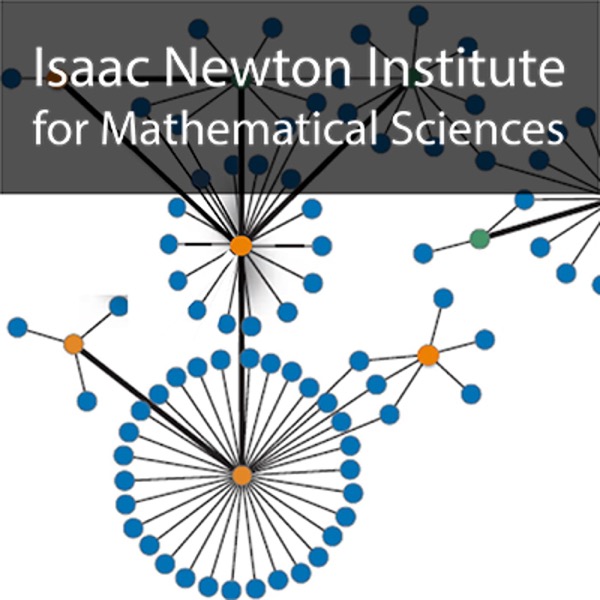
On 1 January 2013, it will be twenty years since Epidemic Models started as a 6-month programme in the first year of the Isaac Newton Institute for Mathematical Sciences. Since then, the field has grown enormously, in topics addressed, methods and data available (e.g. genetics/genomics, immunological data, social, contact, spatial, and movement data were hardly available at the time). Apart from these advances, there has also been an increase in the need for these approaches because we have seen the emergence and re-emergence of infectious agents worldwide, and the complexity and non-linearity of infection dynamics, as well as effects of prevention and control, are such that mathematical and statistical analysis is essential for insight and prediction, now more than ever before. Read more at http://www.newton.ac.uk/programmes/IDD/. Image from The New England Journal of Medicine, Gardy, 'Whole-Genome Sequencing and Social-Network Analysis of a Tuberculosis Outbreak', Volume 364, pp 730-9. Copyright ©2011 Massachusetts Medical Society. Reprinted with permission from Massachusetts Medical Society.